Launch offer — valid today only

📄 Digital book in PDF · read it on your phone or print it

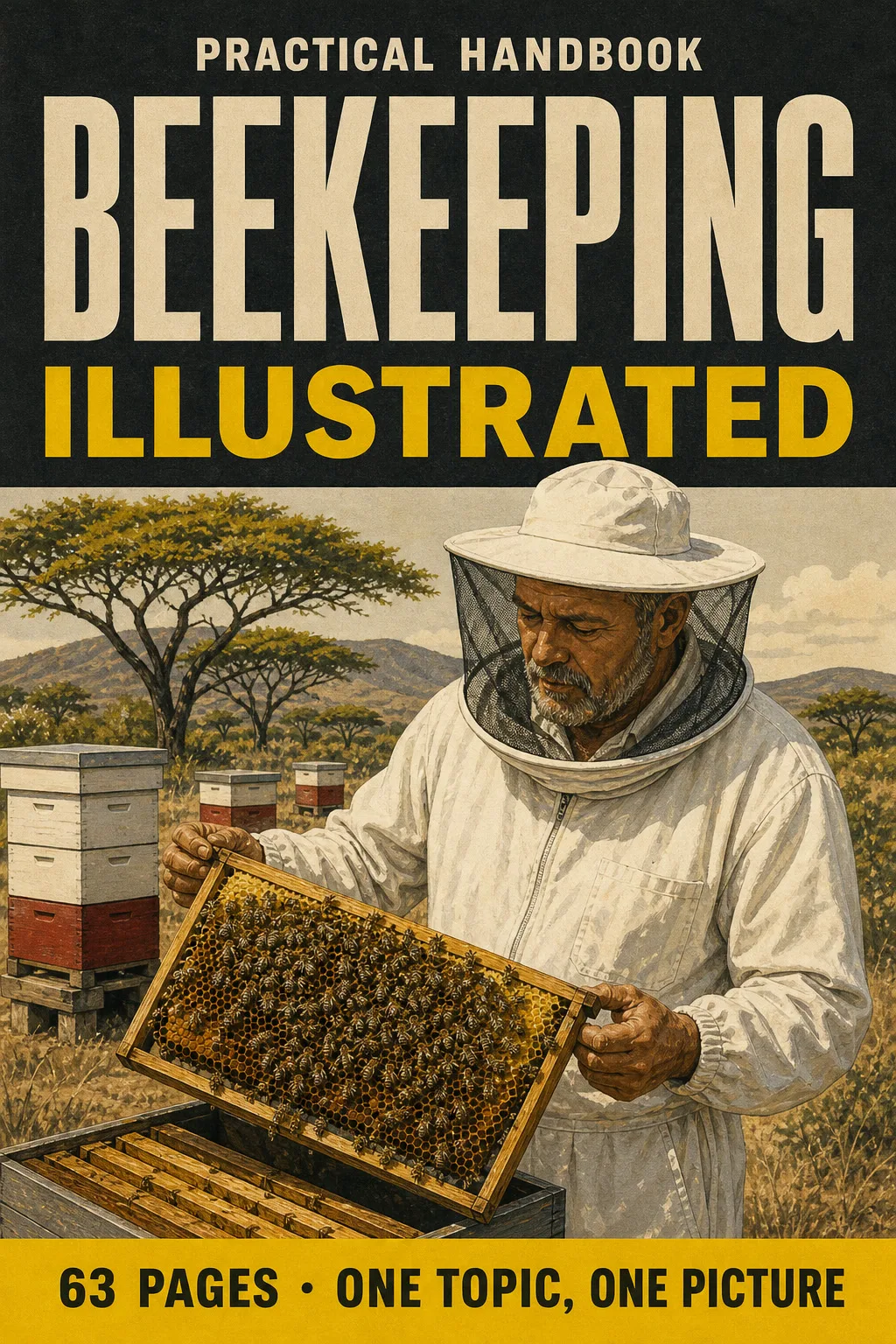
Beekeeping in South Africa, Season by Season, in Drawings. One Inspection Order, Every Visit

Cape and savanna bees, the year for winter-rain and summer-rain regions, the four-step inspection, queen cells and splits, disease signs and the harvest. One topic per page: the drawing first, then what to remember. 63 illustrated pages.

YES, SEND ME BEEKEEPING ILLUSTRATED

🔒 Secure checkout · PDF by email · 30-day guarantee

Every topic, its own pageEvery hive step drawn, with the explanation beside it
63 illustrated pages8 parts, from Cape bee or savanna bee to the most frequent mistakes
Up-to-date sourcesChecked against the Agricultural Pests Act 36 of 1983 (registration, bee diseases, moving bees) and the honey rules under the Agricultural Product Standards Act 119 of 1990
PDF by emailFormat

Look Inside the Book

Every page has one large drawing and a box with the numbers and steps you need to know:

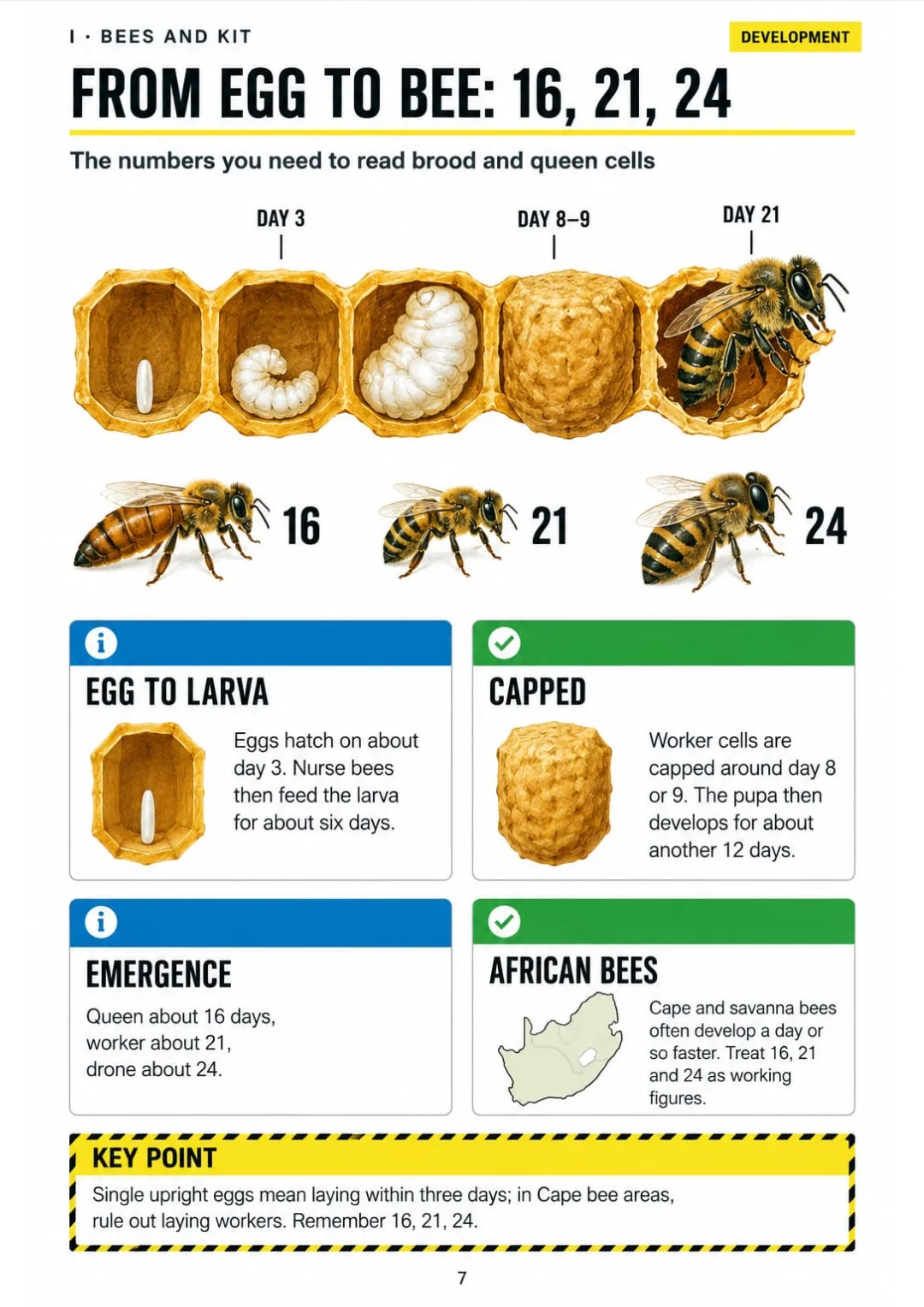
Queen about 16 days, worker 21, drone 24; eggs hatch on day 3.
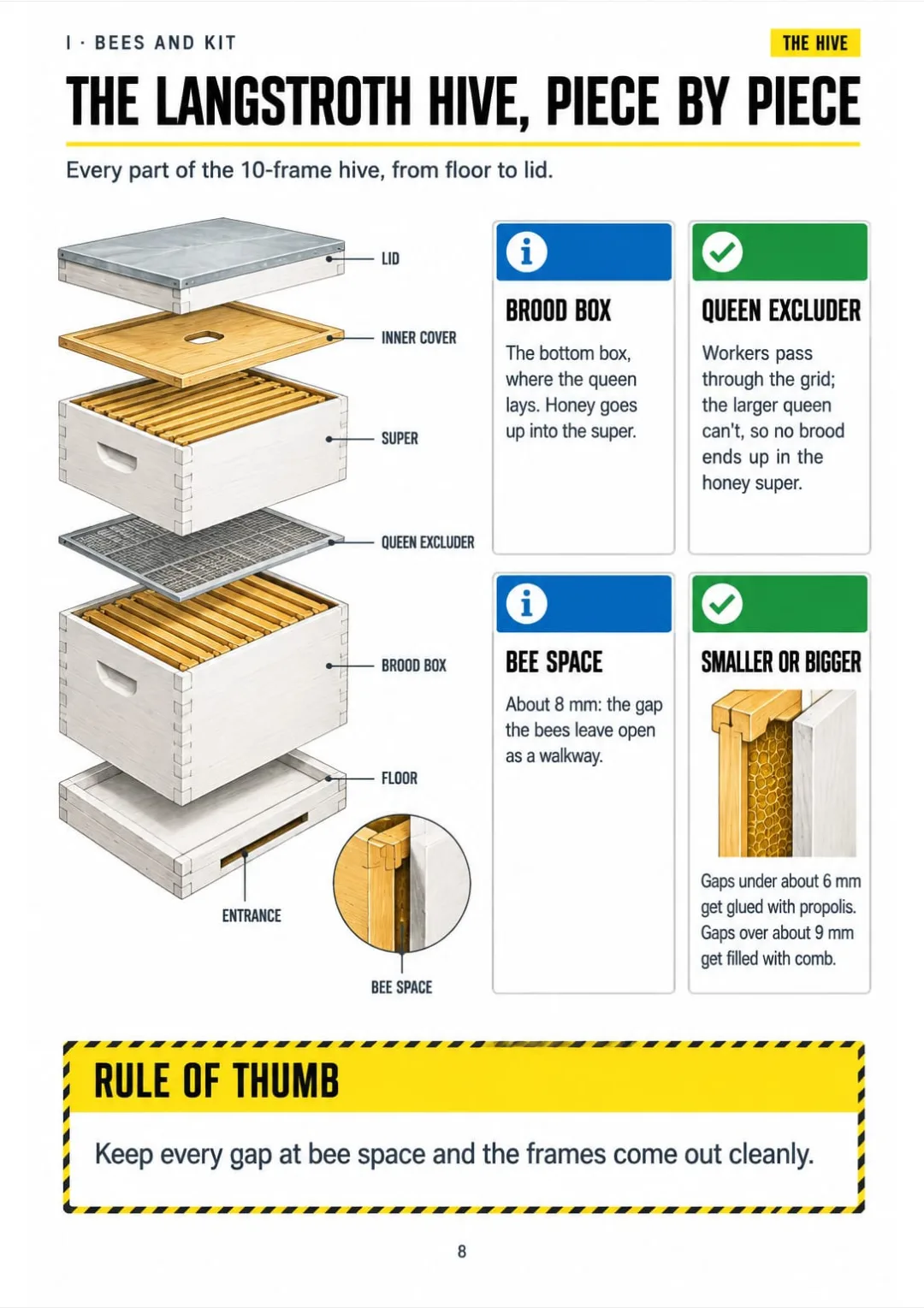
Floor, brood box, excluder, super, inner cover and lid, with about 8 mm of bee space.
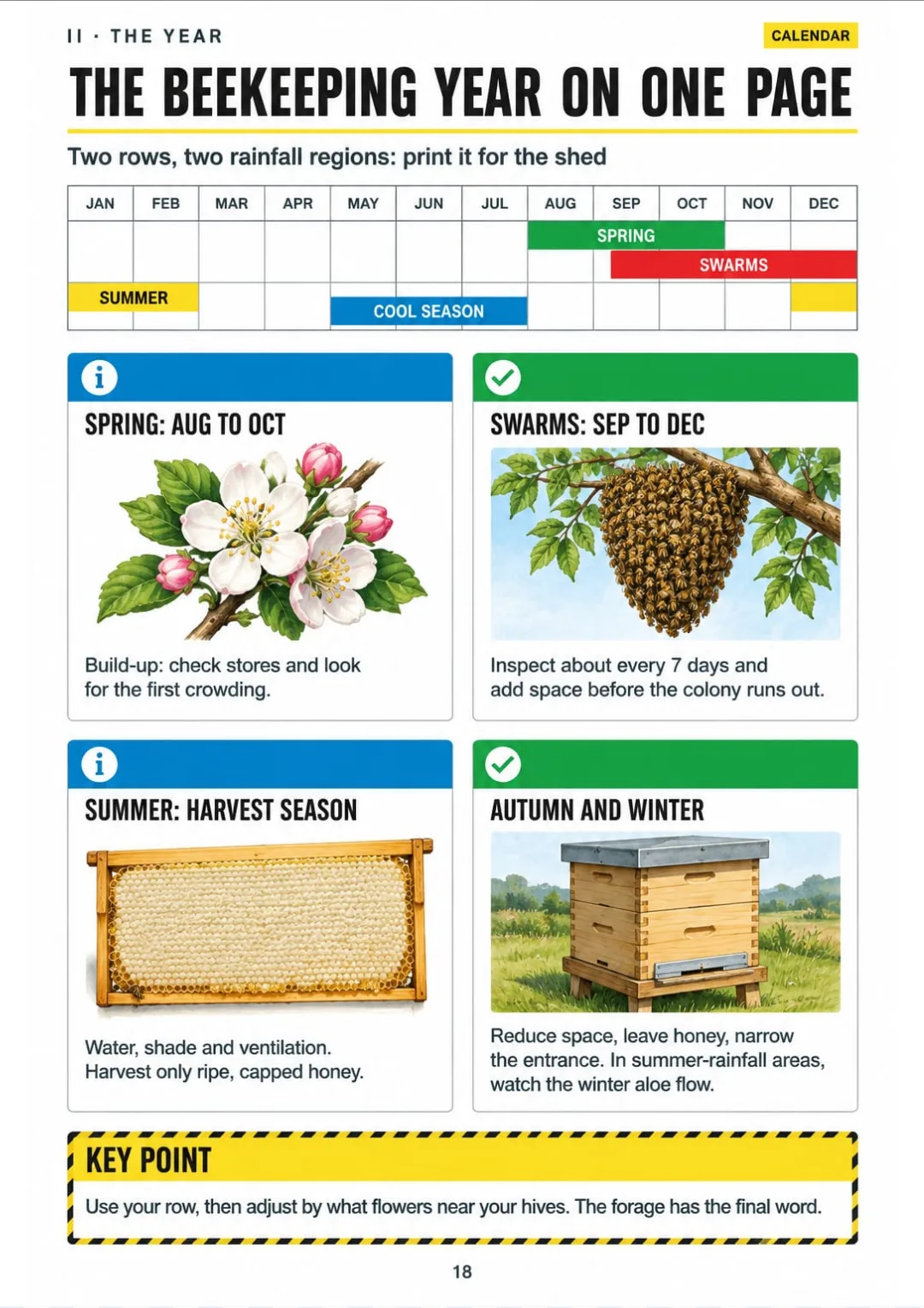
A month-by-month strip for both rainfall regions, ready to print
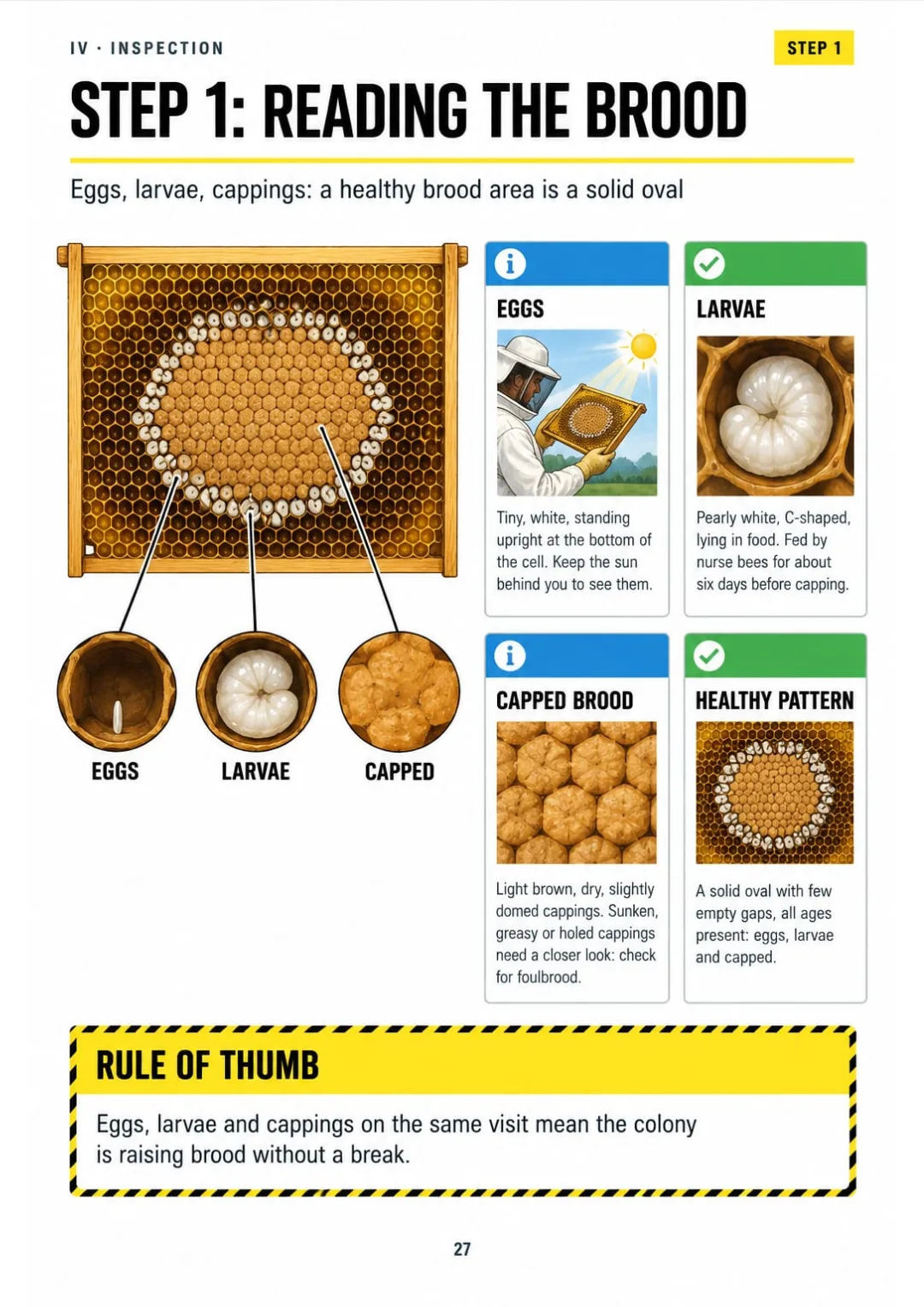
Eggs upright, larvae C-shaped, cappings light brown: a solid oval of brood
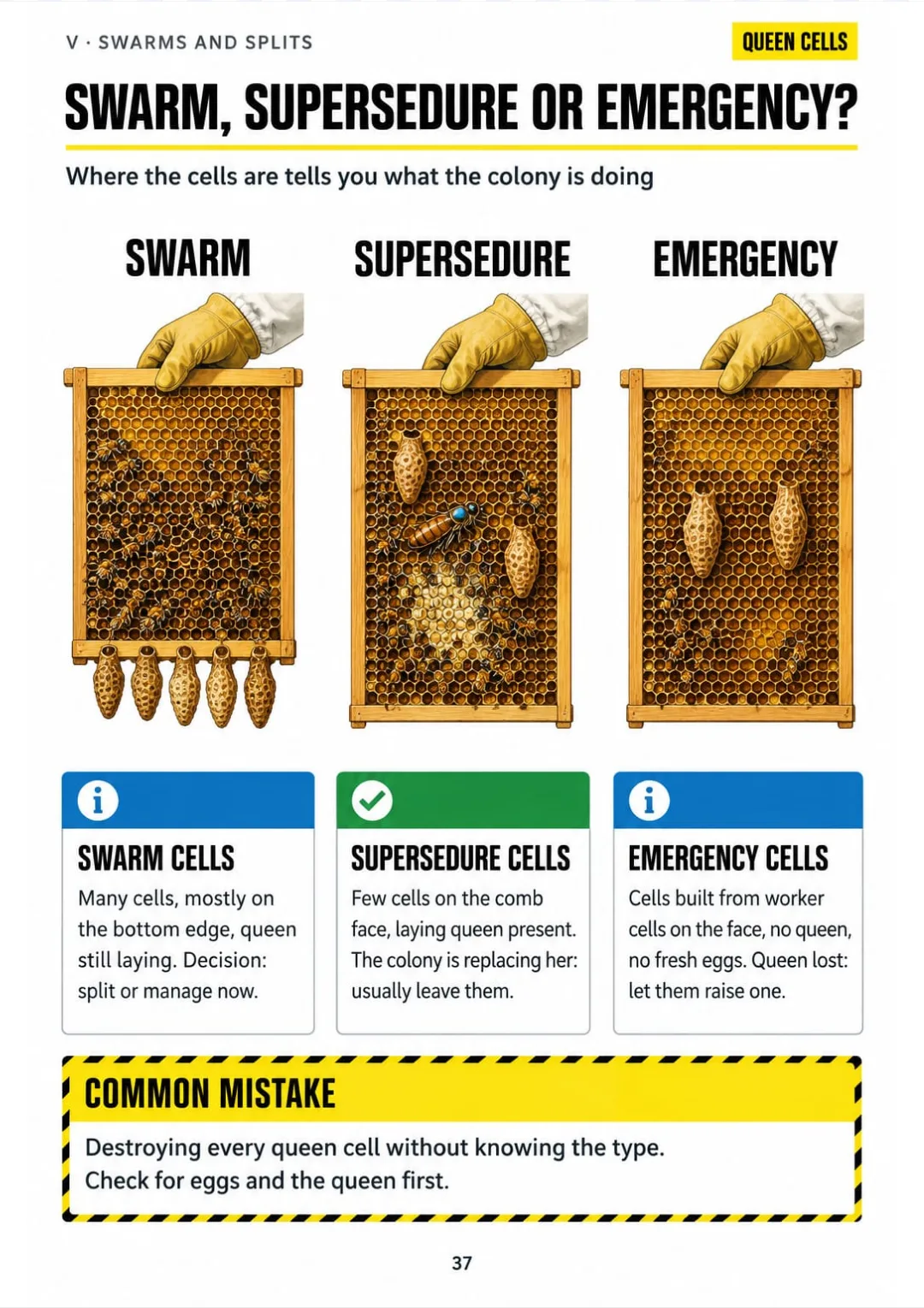
Bottom edge and many: swarm. Few on the face with a queen: supersedure. No queen: emergency.
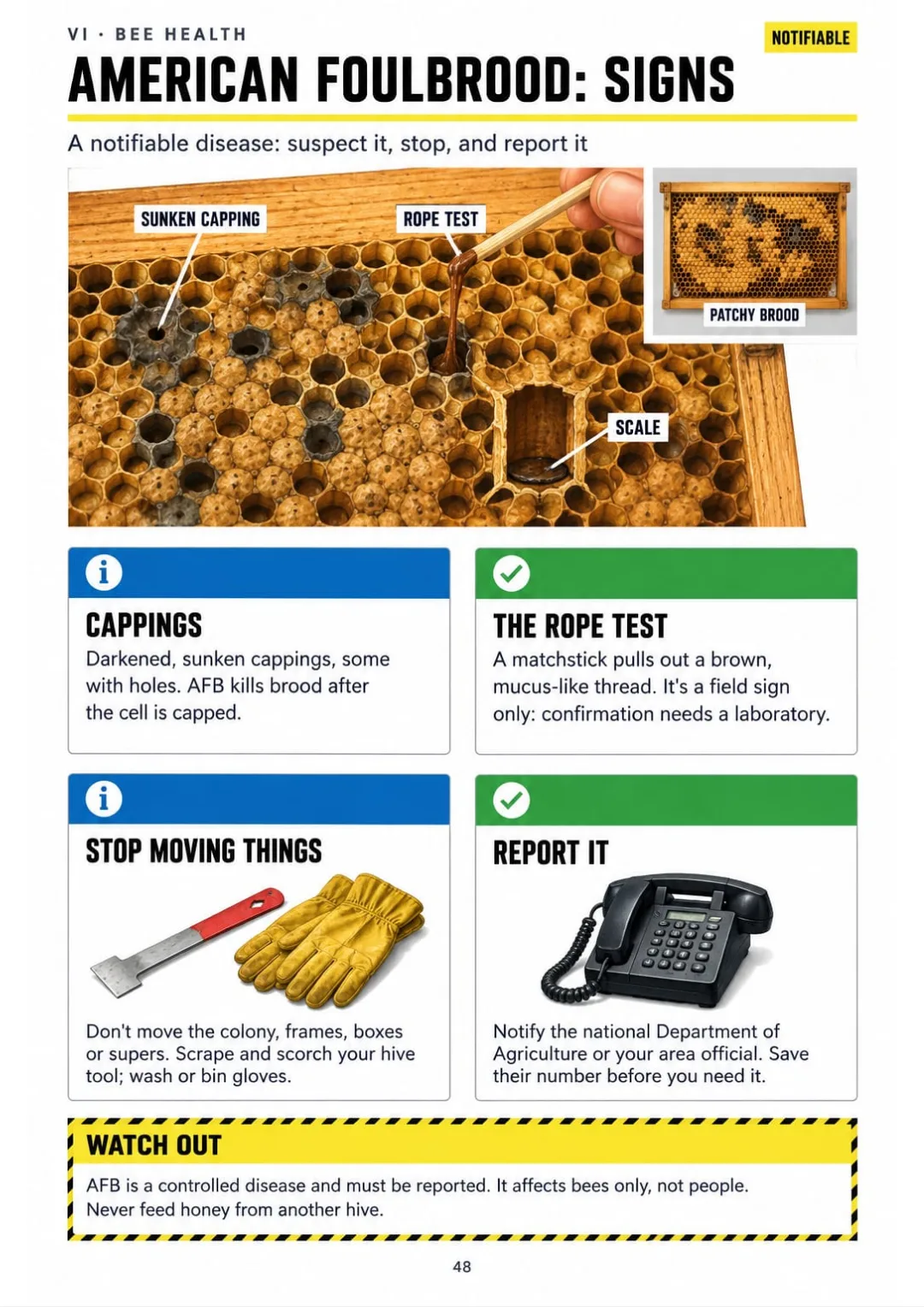
Sunken cappings, ropy brown remains, dark scale: suspect AFB and report it.
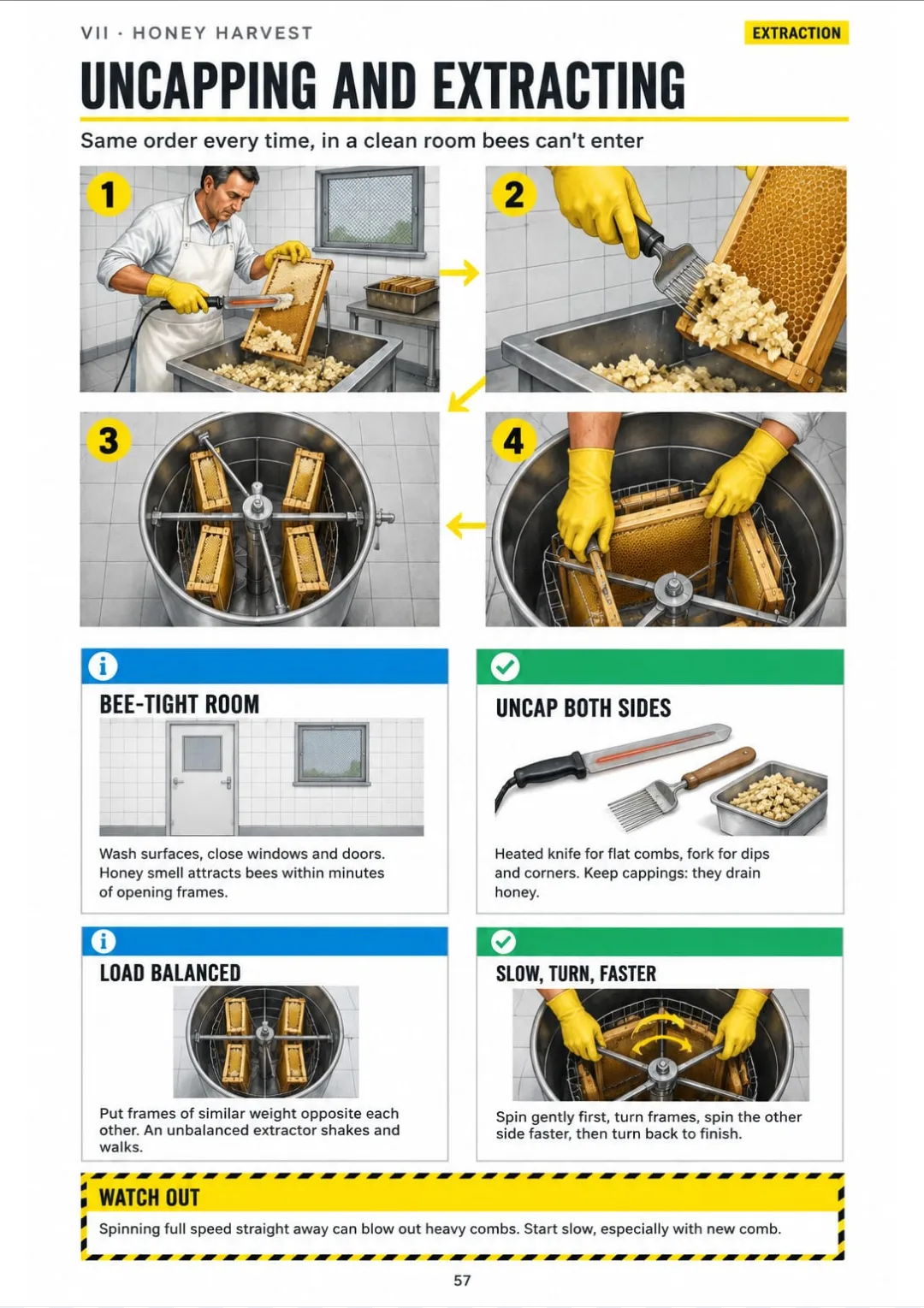
Balanced frames, a gentle first spin, then turn them over
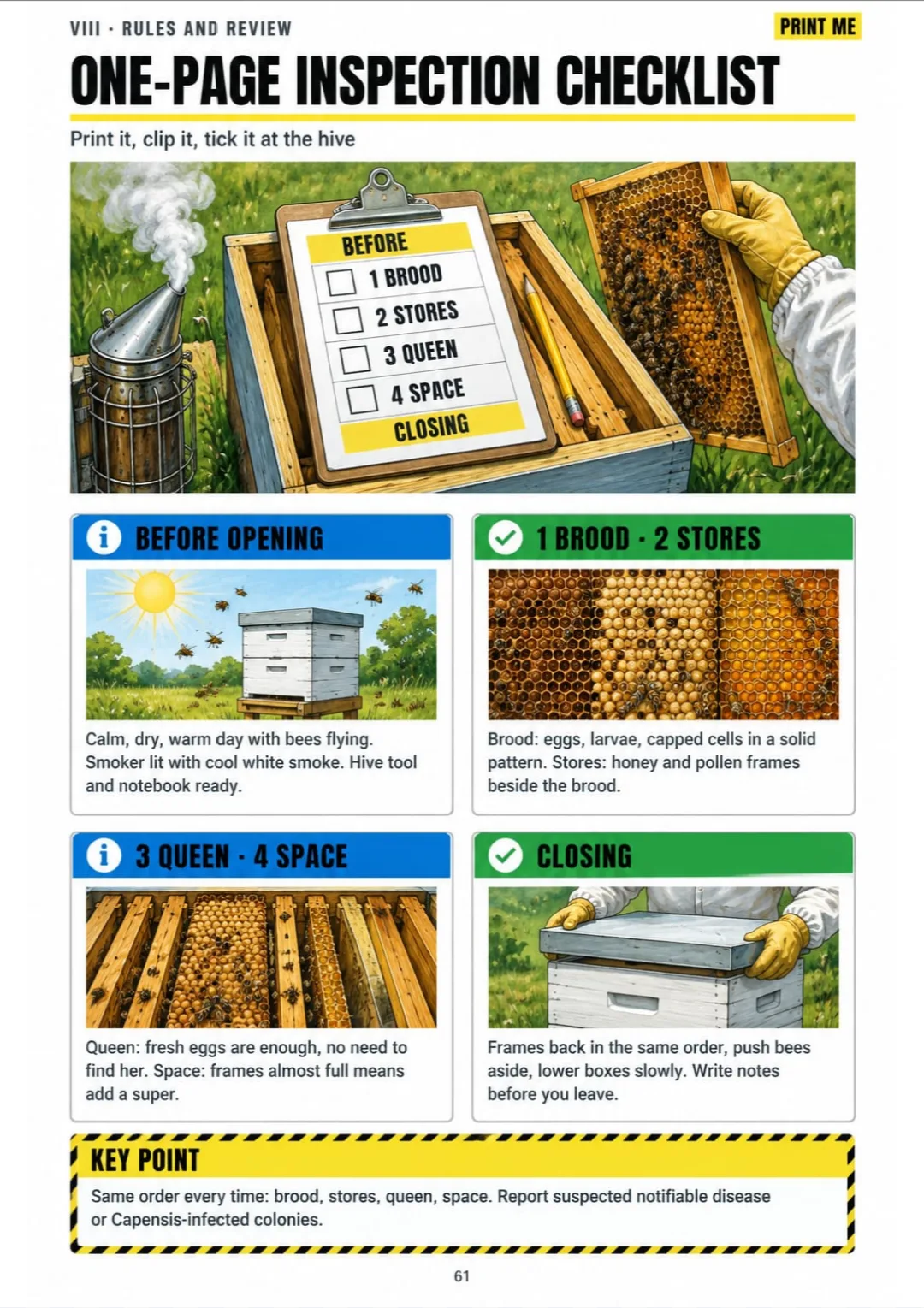
Before, brood, stores, queen, space, closing: the whole inspection on one printable page

Swipe to see more →

These are real pages from the book. The table of contents is the full one: 8 parts and 59 topics.

The Problem Isn't You. It's How It Was Explained to You.

It's late spring. You're standing at the hive with the lid in your hand, and you're not sure what this month should look like: build-up, swarm season or the start of the flow?

The manual covers the year in long paragraphs, often with northern-hemisphere months. Nobody tells you that the Western Cape and Gauteng run on different calendars.

A month-by-month strip for both rainfall regions, ready to print

In the book, the whole year is one page: a month-by-month strip for both rainfall regions, with build-up, swarm season, the flows and the quiet months drawn side by side. You find your region, find November, and see what the colony is doing.

Every other topic works the same way: the brood frame, queen cells, the swarm clock, the signs of American foulbrood, when honey is ready. Each one has its own page.

So you put the lid down knowing what to check today. You understand it, and you do it without going back to the manual.

COMPARE FOR YOURSELF

The Same Topic, Two Ways to Learn It

THIS
  • The manual: line after line of text
  • Hive parts and bee space explained only in words
  • You get to the hive still unsure
The Langstroth hive is a modular system of vertically stacked components. The floor, or bottom board, provides the entrance and supports the brood chamber, in which the queen lays and the colony rears its young. A queen excluder may be positioned above the brood chamber to restrict the queen's access to the honey supers, in which surplus stores are deposited. The inner cover and lid complete the assembly. A bee space of approximately 8 mm must be maintained between all components to prevent bridging comb and excessive propolis deposition.
FOR THIS
  • The whole hive in one drawing
  • The 8 mm of bee space in a box
  • You see it and it makes sense
Floor, brood box, excluder, super, inner cover and lid, with about 8 mm of bee space.
CONTENTS

Take a Look at the 8 Parts and 59 Topics

Your bees and kit, the beekeeper's year in South Africa, opening the hive, the four-step inspection, swarms and splits, bee health, the honey harvest, and rules and checklists: 63 pages, all illustrated.

IYour Bees and Your Kit · pp. 5-11
  1. Cape Bee or Savanna Bee?
  2. Who Lives in the Hive
  3. From Egg to Bee: 16, 21, 24
  4. The Langstroth Hive, Piece by Piece
  5. Frames, Foundation and Drawn Comb
  6. Gear: Suit, Veil, Smoker, Hive Tool
  7. Where to Put the Hive
IIThe Beekeeper's Year in South Africa · pp. 12-18
  1. Winter Rain or Summer Rain: Your Calendar Shifts
  2. Spring Build-Up (August to October)
  3. Swarm Season (September to December)
  4. South Africa's Main Nectar Flows
  5. Summer Heat and Drought
  6. Autumn and Winter: Leave Them Be
  7. The Year on One Page
IIIOpening the Hive · pp. 19-25
  1. When to Open and When Not To
  2. Lighting the Smoker
  3. Approaching the Hive
  4. Taking Out the First Frame
  5. Reading the Colony's Mood
  6. Closing Up Without Crushing Bees
  7. Stings: What to Do
IVThe Inspection in Four Steps · pp. 26-34
  1. Always the Same Order: Brood, Stores, Queen, Space
  2. Step 1: Brood (Eggs, Larvae, Capped)
  3. Spotty Brood: What It Can Mean
  4. Step 2: Stores (Honey and Pollen)
  5. Step 3: Queen (Eggs Are Enough)
  6. Signs of a Queenless Colony
  7. Laying Workers and the Cape Bee
  8. Step 4: Space (When to Add a Super)
  9. Write It Down Before You Forget
VSwarms and Splits · pp. 35-43
  1. Why a Colony Swarms
  2. Early Swarm Signs
  3. Swarm, Supersedure or Emergency Cell?
  4. The Swarm Clock
  5. The Walk-Away Split
  6. Splitting with the Queen (Moving the Old Queen)
  7. Catching a Swarm
  8. Absconding Is Not Swarming
  9. Moving Bees: What the Law Says
VIBee Health: Recognise and Report · pp. 44-52
  1. A Healthy Colony at a Glance
  2. Varroa: Recognising the Mite
  3. Small Hive Beetle
  4. Wax Moth
  5. American Foulbrood: Signs and Reporting
  6. European Foulbrood
  7. The Capensis Problem
  8. Pesticide Poisoning
  9. Who to Call
VIIHoney Harvest · pp. 53-59
  1. When Is Honey Ready?
  2. The Shake Test and the Refractometer
  3. Getting the Supers Off
  4. How Much Honey to Leave
  5. Uncapping and Extracting
  6. Straining, Settling and Bottling
  7. Labels, If You Sell
VIIIRules, Review and Checklists · pp. 60-63
  1. Registration and Bylaws
  2. One-Page Inspection Checklist
  3. Swarm-Season Checklist
  4. The Most Frequent Mistakes, at a Glance

One Page, One Topic, All Clear

Think of it this way:

It's a warm Saturday in November. You lift a frame from the brood box and there are queen cells along the bottom bar.

You open the page on swarm, supersedure and emergency cells and see the three cases drawn side by side: where the cells sit, how many there are, and whether there's a queen.

Bottom edge and many: swarm. Few on the face with a queen: supersedure. No queen: emergency.

The same goes for reading the brood, the swarm clock, the shake test, varroa and the walk-away split: each one on its own page.

Beekeeping Illustrated is 8 parts and 59 topics, all drawn, and it ends with a one-page inspection checklist, a swarm-season checklist and the most frequent mistakes at a glance.
What you see drawn, you don't have to memorize.

What's Inside Beekeeping Illustrated:

Ipp. 5-11

Your Bees and Your Kit

Cape bee or savanna bee, who lives in the hive, the 16-21-24 day cycle, the Langstroth hive piece by piece, frames and comb, your gear and where to place the hive.

IIpp. 12-18

The Beekeeper's Year in South Africa

Winter-rain and summer-rain calendars, spring build-up, swarm season, the main nectar flows, heat and drought, autumn and winter, and the whole year on one page.

IIIpp. 19-25

Opening the Hive

When to open and when not to, lighting the smoker, approaching the hive, the first frame, reading the colony's mood, closing up and what to do about stings.

IVpp. 26-34

The Inspection in Four Steps

The fixed order of brood, stores, queen and space, spotty brood, queenless signs, laying workers and the Cape bee, when to add a super and keeping records.

Vpp. 35-43

Swarms and Splits

Why colonies swarm, early signs, swarm, supersedure or emergency cells, the swarm clock, two ways to split, catching a swarm, absconding and moving bees legally.

VIpp. 44-52

Bee Health: Recognise and Report

A healthy colony at a glance, varroa, small hive beetle, wax moth, American and European foulbrood, the capensis problem, pesticide poisoning and who to call.

VIIpp. 53-59

Honey Harvest

When honey is ready, the shake test and the refractometer, taking off supers, how much to leave, uncapping, extracting, bottling and labels if you sell.

VIIIpp. 60-63

Rules, Review and Checklists

Registration and bylaws, a one-page inspection checklist, a swarm-season checklist and the most frequent mistakes at a glance.
At the end of the book: A printable one-page inspection checklist, a swarm-season checklist and the most frequent mistakes at a glance.
Plus: 2 Free Books

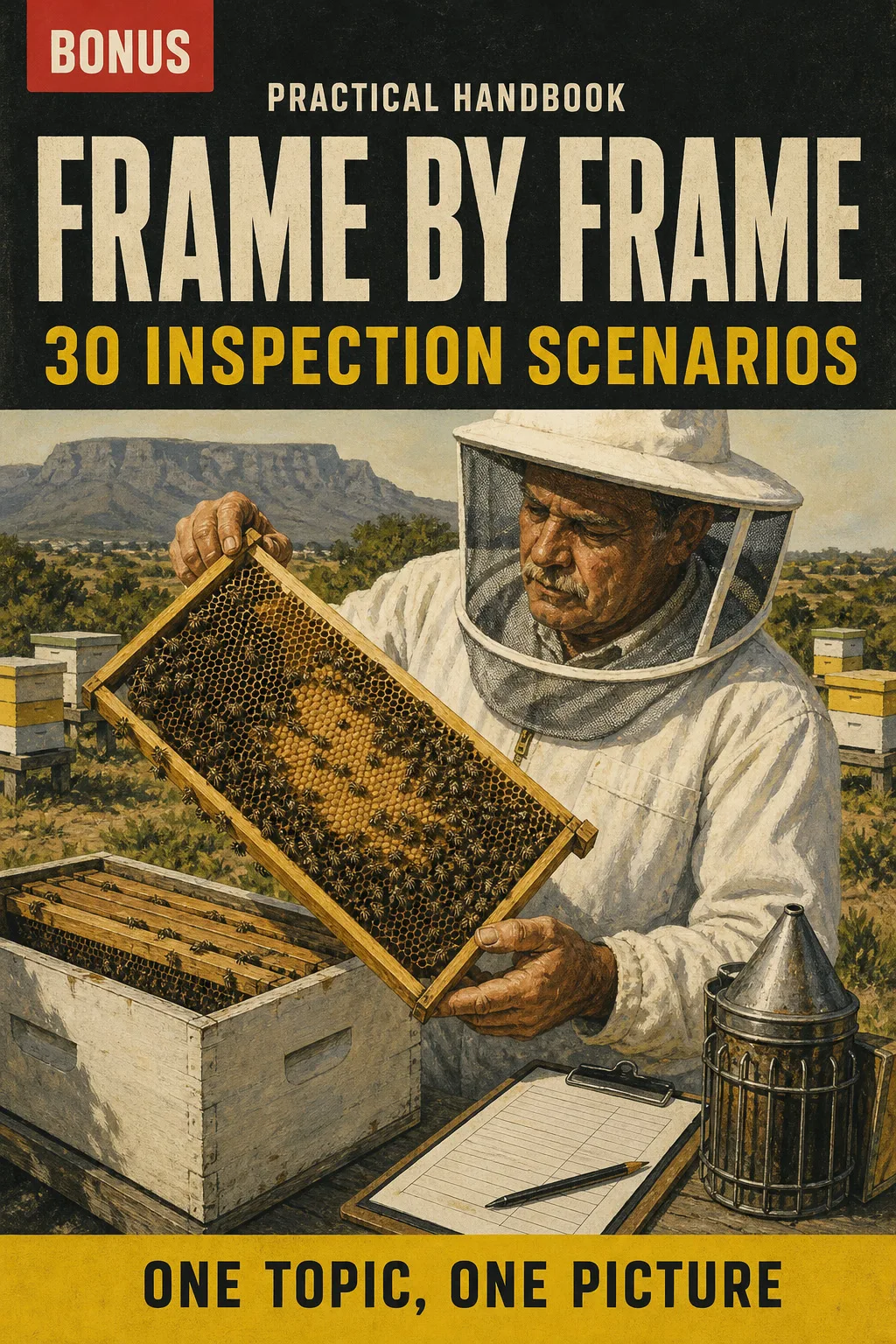
Frame by Frame: 30 Inspection Scenarios

BONUS 1: «Frame by Frame: 30 Inspection Scenarios»

Value on its own: US$ 17.90

Practise reading a frame before you're standing at the hive: 30 drawn frames (brood pattern, stores, queen cells, space) and you decide what to do, with the answer on the next page.

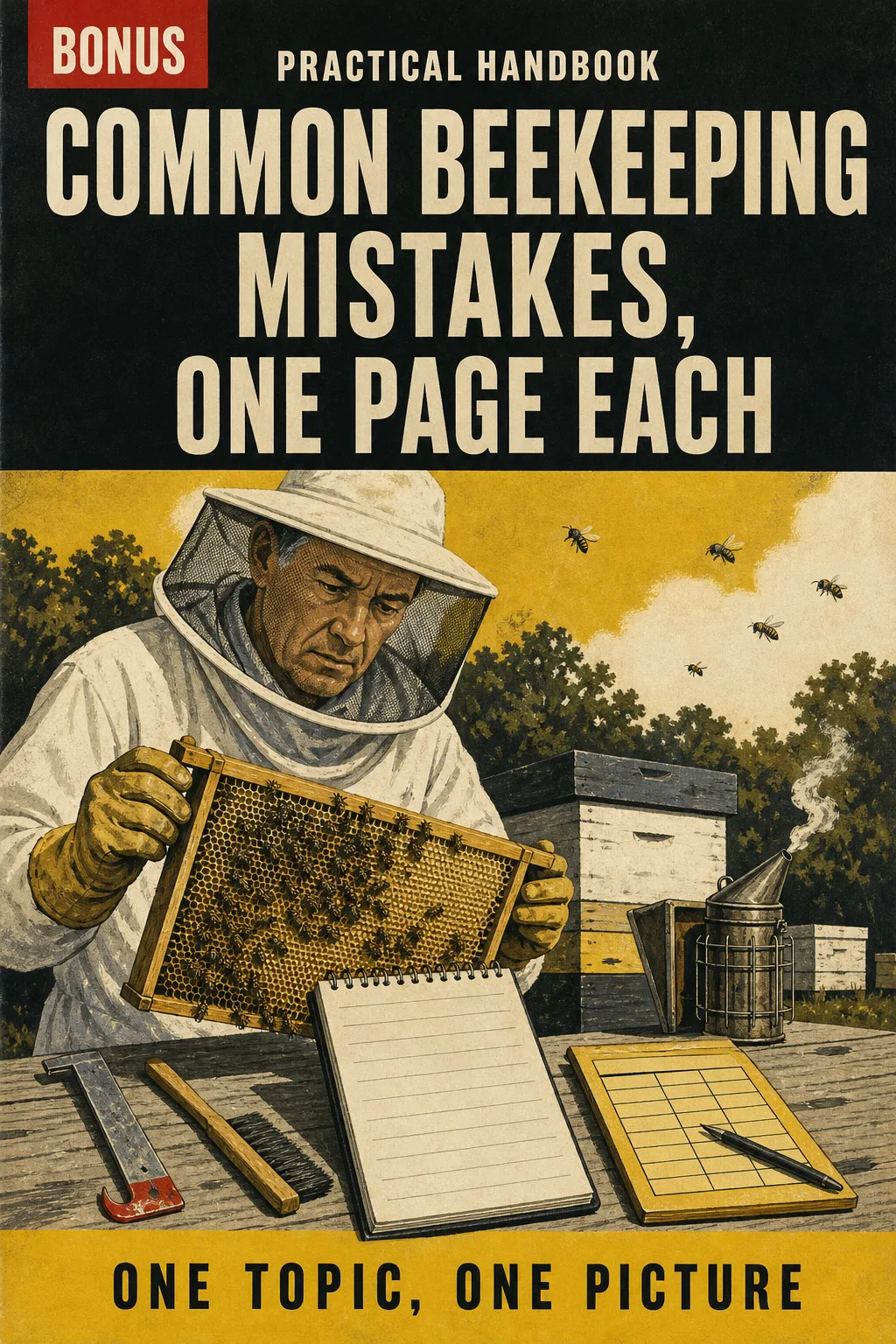
Common Beekeeping Mistakes, One Page Each

BONUS 2: «Common Beekeeping Mistakes, One Page Each»

Value on its own: US$ 14.90

The most frequent mistakes when opening, splitting and harvesting, each drawn next to the right way, so you can go over them in a few minutes before a hive visit.

Beekeeping Illustrated with 2 Free Books

  • Beekeeping Illustrated: 63 illustrated pagesUS$ 63
  • BONUS 1: Frame by Frame: 30 Inspection ScenariosUS$ 17.90
  • BONUS 2: Common Beekeeping Mistakes, One Page EachUS$ 14.90
  • High-resolution PDF to printIncluded
Total value US$ 95.80
YOUR PRICE:
US$ 27
You save US$ 68.80
YES, I WANT BEEKEEPING ILLUSTRATED FOR US$ 27

📄 This is a digital PDF book sent to your email: nothing is printed or shipped.

Secure purchaseEncrypted payment30-day guarantee

PDF by email: We email you Beekeeping Illustrated as a PDF, together with the two free books. It's a single payment: no instalments, no extra charges.

Who This Book Is For

You're setting up your first hive

You're setting up your first hive

The parts of the hive, where to put it and the year in your rainfall region, each on its own page, so you start with a plan and not with ten opinions.

It's swarm season and you have to decide

It's swarm season and you have to decide

Queen cells, the swarm clock and the two ways to split, drawn step by step, so you know whether to split, wait or leave them.

You've kept bees for a few years

You've kept bees for a few years

One fixed inspection order and a printable checklist for the shed wall, plus the disease signs to recognise and who to call.

Everything You Get Today

US$ 95.80US$ 27
YES, I WANT BEEKEEPING ILLUSTRATED FOR US$ 27

📄 This is a digital PDF book sent to your email: nothing is printed or shipped.

30DAYS
GUARANTEE

30-Day Guarantee

Try Beekeeping Illustrated for 30 days, bonus books included.

We refund everything if the file won't open, if the book isn't what you see here, if you were charged twice or if the email doesn't arrive. Just email us.

You pay once. No subscriptions.

Frequently Asked Questions

Is it for me if I already have a few hives, or I'm about to set up my first?

Yes. It's written for South Africa: Cape and savanna bees, winter-rain and summer-rain calendars, metric units and local rules. It starts with the hive and the bees and goes on to the four-step inspection, splits, bee health and the harvest. If you've kept bees for a few years, it gives you one fixed order to follow and a printable checklist for the shed.

Where does the content come from?

From established beekeeping practice, set to South African seasons and metric units, and checked against the Agricultural Pests Act 36 of 1983 (registration, controlled bee diseases, moving bees) and the honey regulations under Act 119 of 1990. Rules can change: confirm with your provincial department of agriculture.

Is it official material?

No. It's an independent illustrated book. It isn't affiliated with or endorsed by the Department of Agriculture or any beekeeping association.

Does it replace a beekeeping course?

No. It doesn't replace hands-on training, a mentor, a bee inspector or the manufacturer's instructions. It gives no treatments or doses: it shows the signs to recognise and who to call. If someone reacts badly to a sting, get emergency medical help.

Are the practice scenarios taken from a course or exam?

No. The 30 inspection scenarios are written for this book and aren't official questions from any course or exam.

When and how does it arrive?

The book and the 2 bonus books arrive as a PDF by email, at the address you enter at checkout.

Do I have to pay every month?

No. It's a one-off payment.

Can I have it on paper?

Yes. It's a printable PDF: print the whole book or just the pages you want at the hive, like the inspection checklist.

How does the refund work?

You have 30 days. We refund everything if the file won't open, if the book isn't what you see on this page, if you were charged twice or if the email doesn't arrive: just email us.

Before You Close This Page

No more standing at the open hive, unsure what to do next.

Queen cells, brood and stores: you see them drawn and you know.

You get to the hive knowing where everything is.

Drawings make studying faster.

The book is right below.

One-time payment: US$ 27 · Guarantee: 30 days · PDF by email

YES, I WANT BEEKEEPING ILLUSTRATED FOR US$ 27

📄 This is a digital PDF book sent to your email: nothing is printed or shipped.